Welcome to our online exhibition celebrating vintage, weathered books! Scroll down to browse through our series of photographs and learn more about the featured book for the month: a 1923 copy of Life on the Mississippi by Mark Twain. Questions? Please reach out to guest curator CJ McGillivray.
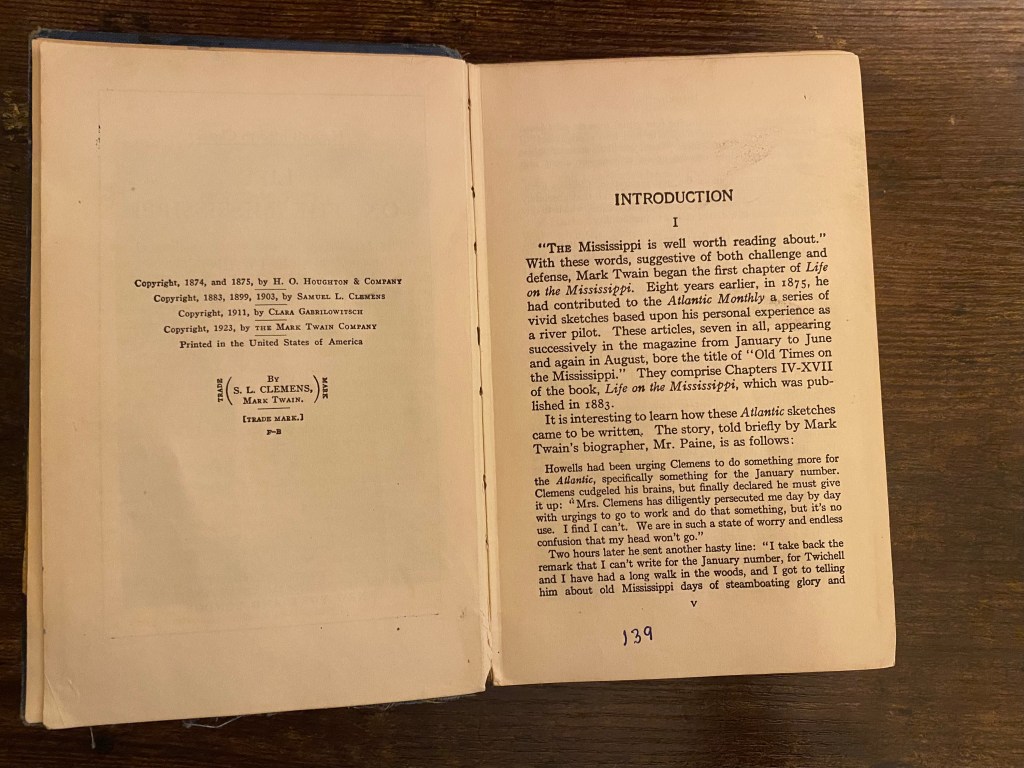
Photographs of Life on the Mississippi taken by CJ McGillivray
- What is your choice of media object?
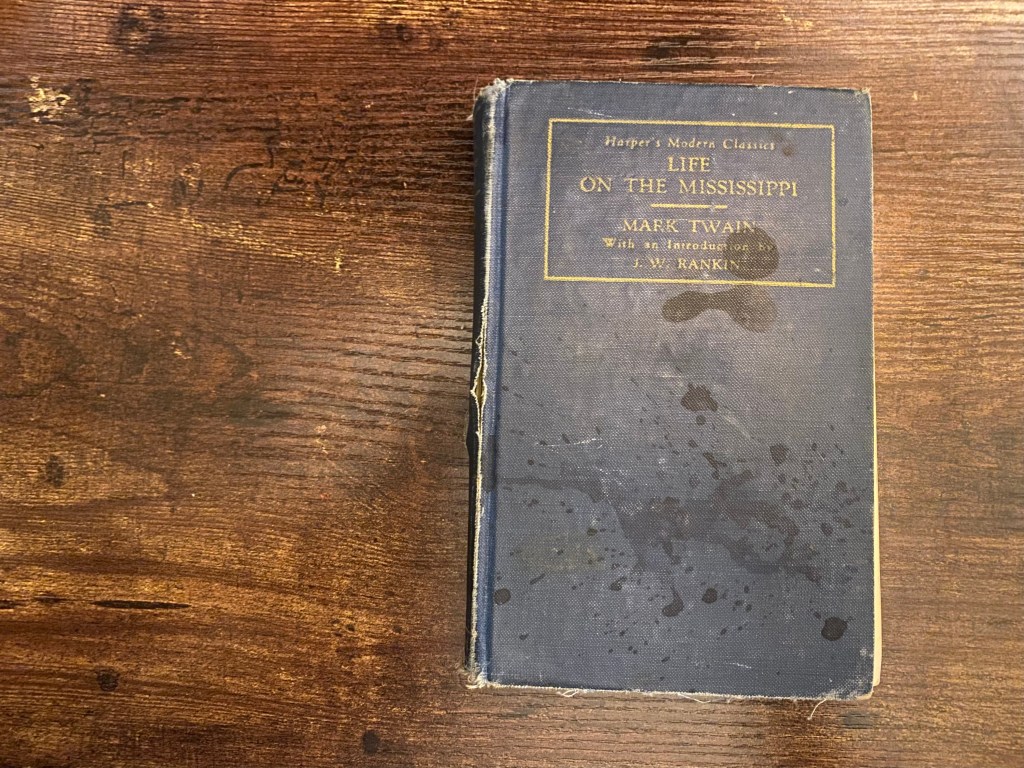
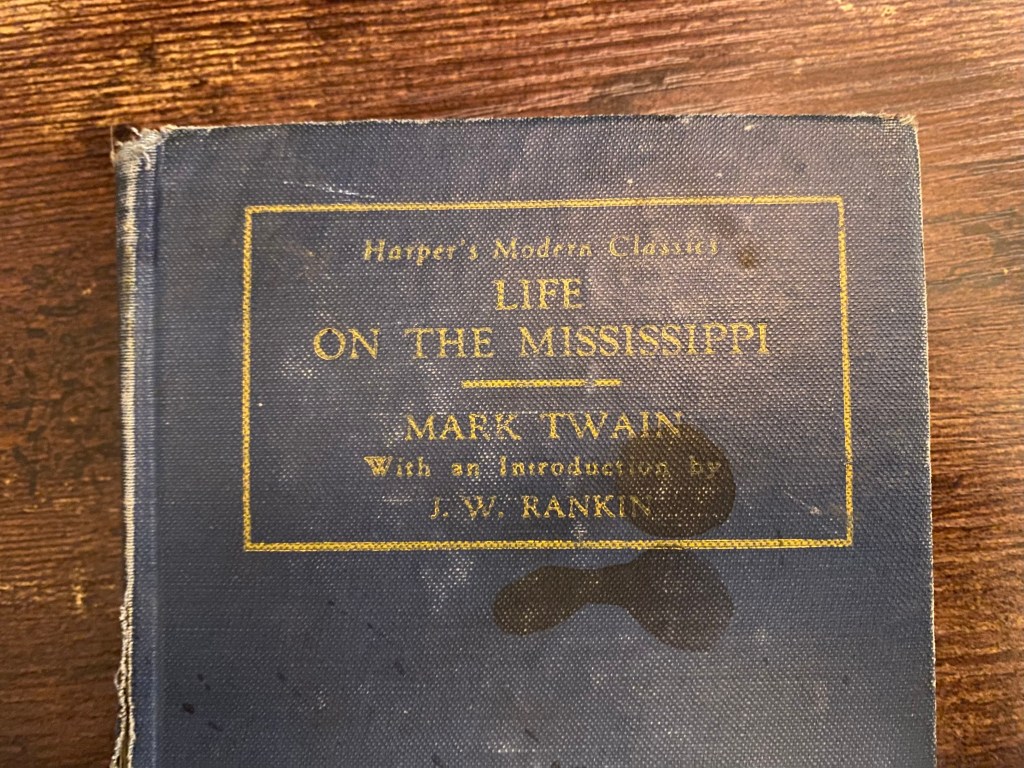
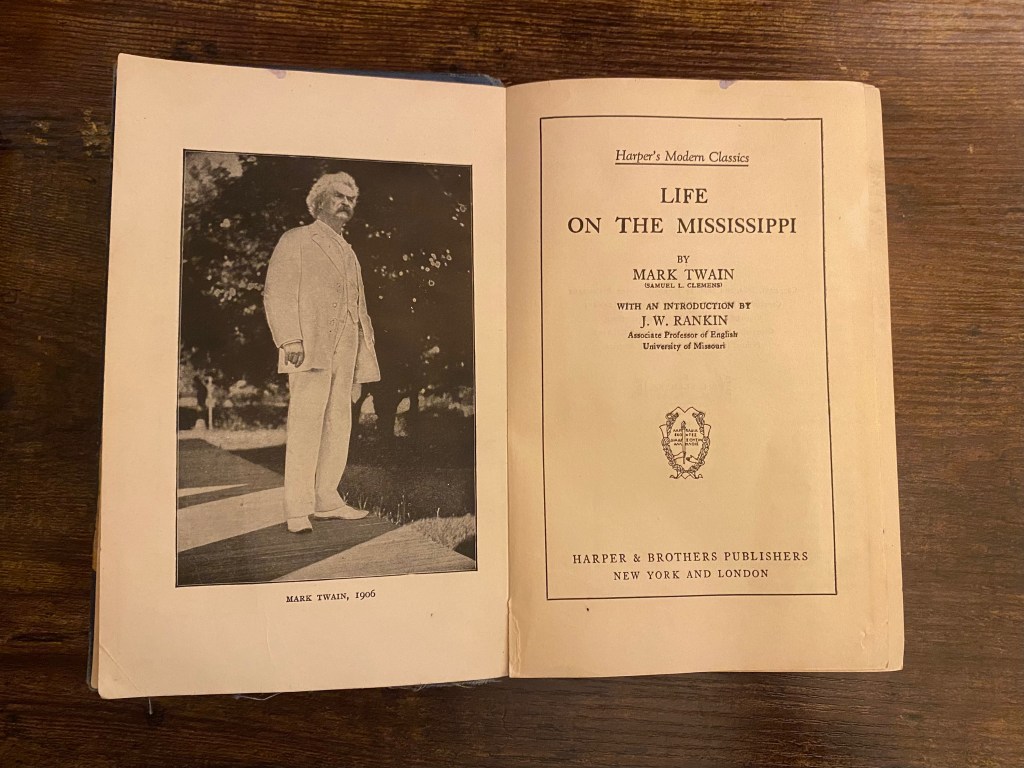
My family has inherited some rather weathered and storied old books, so I have decided to select one of them for our online exhibition. The media object I am choosing is a 1923 print book edition of Life on the Mississippi by Mark Twain, with an introduction by J. W. Rankin.
- How would you describe the media object and its origins?
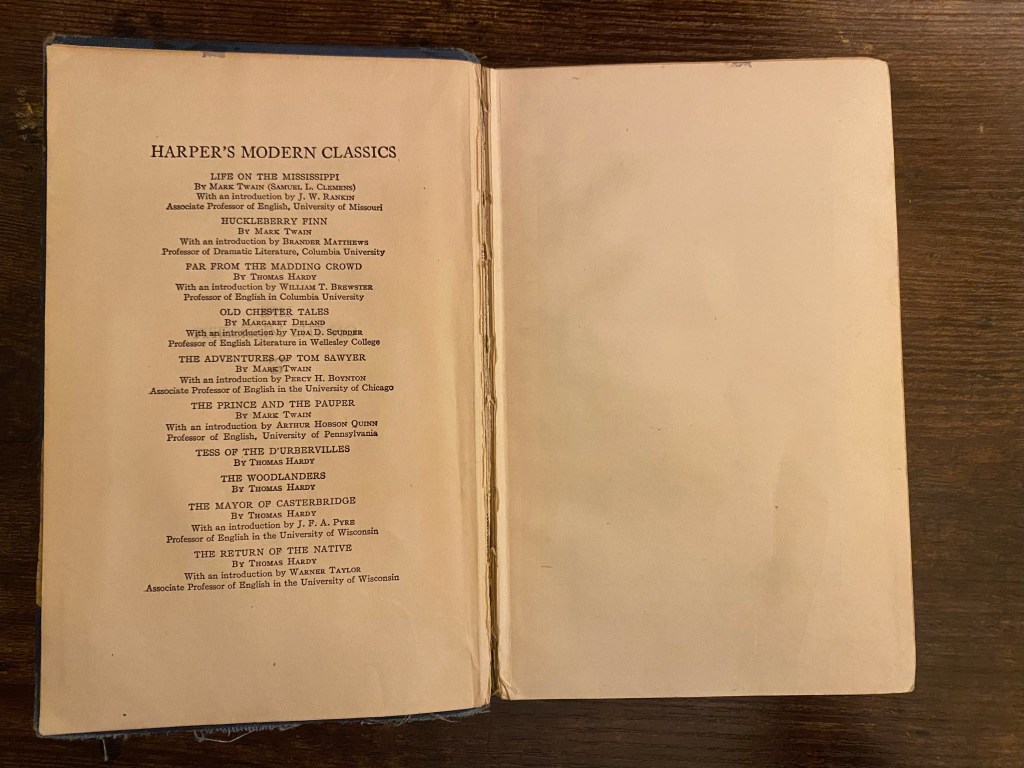
This media object was published by Harper’s Modern Classics (HMC). The original copyright dates back to 1874 through, but this particular edition was printed in the United States in 1923, copyright under The Mark Twain Company. When researching the publisher of this media object, I found an online archive of over 3000 books with dust jackets published between the 1890s and the 1980s. The online archive, Series of Series, is currently maintained by scholar John Krygier from Ohio Wesleyan University. It includes a nearly identical book to mine, though theirs has a solid brown cloth cover, whereas the copy I have features a navy blue cloth cover. Browsing the archival page for HMC, I learned that the “series initially consisted of Harper back catalog titles” and was given the following label: “edited for educational use” (Krygier, para. 2). I also learned that “[a]mong the Twain titles in the series, some were the first inexpensive editions of his books” (Krygier, para. 2).
- What are some additional details about the history of Harper’s Modern Classics?
The Harper Collins website states that “[f]or more than a century, Harper Perennial Modern Classics has published notable works of classic literature from some of the world’s most celebrated writers.” The series has an educational focus but includes a broad range of genres including fiction and nonfiction writing. Some of the featured authors include Aldous Huxley, Sylvia Plath, Richard Wright, Thornton Wilder, Doris Lessing, Harper Lee, Allen Ginsberg, Betty Smith, and Mark Twain.
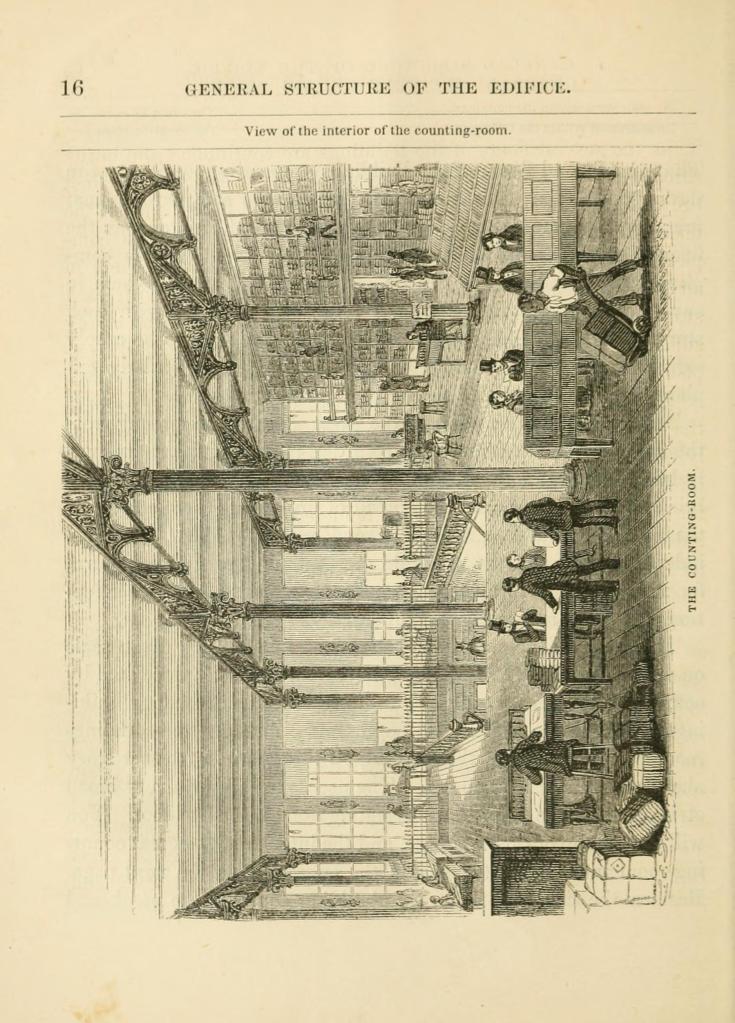
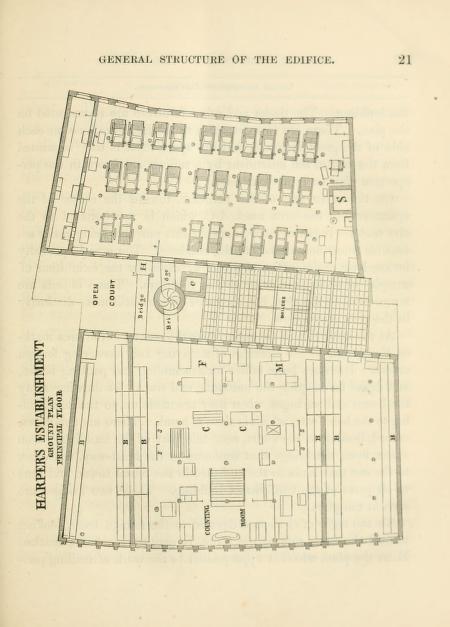
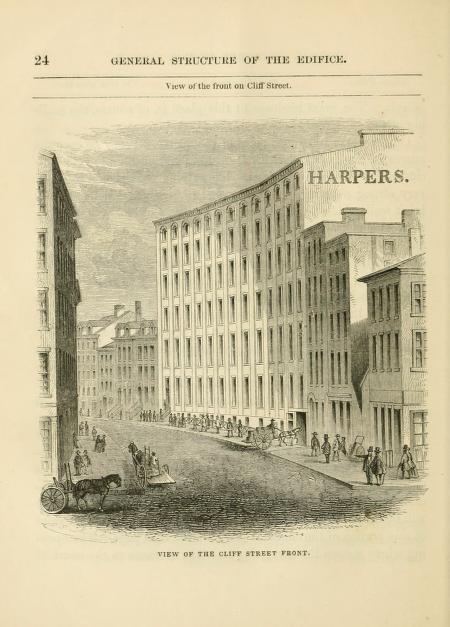
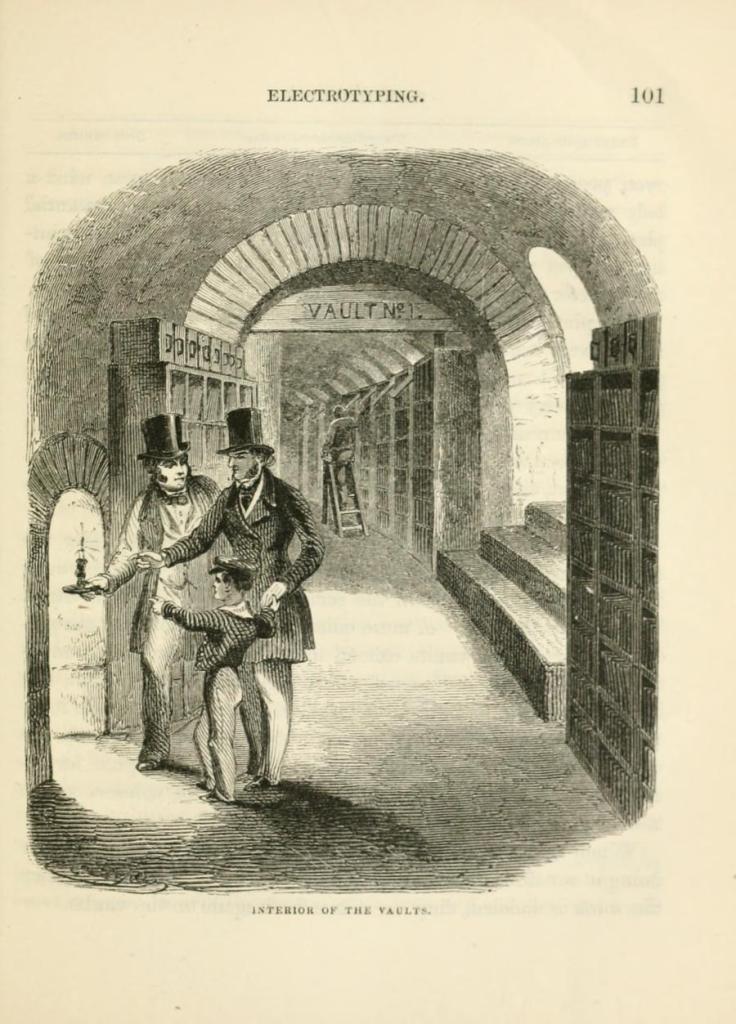
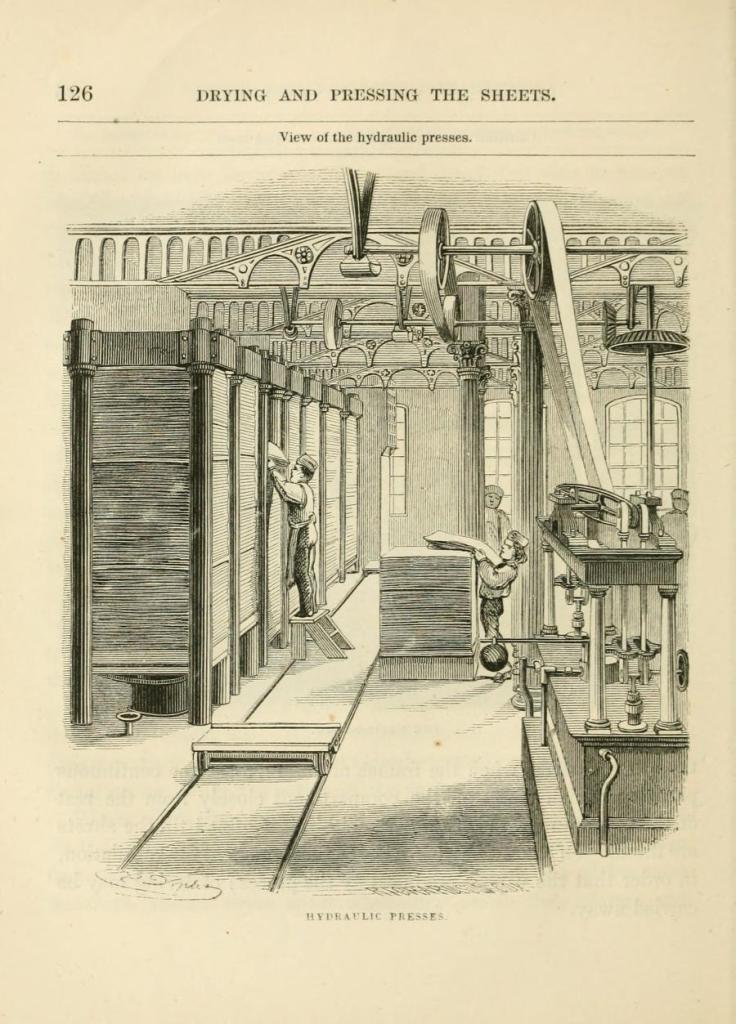
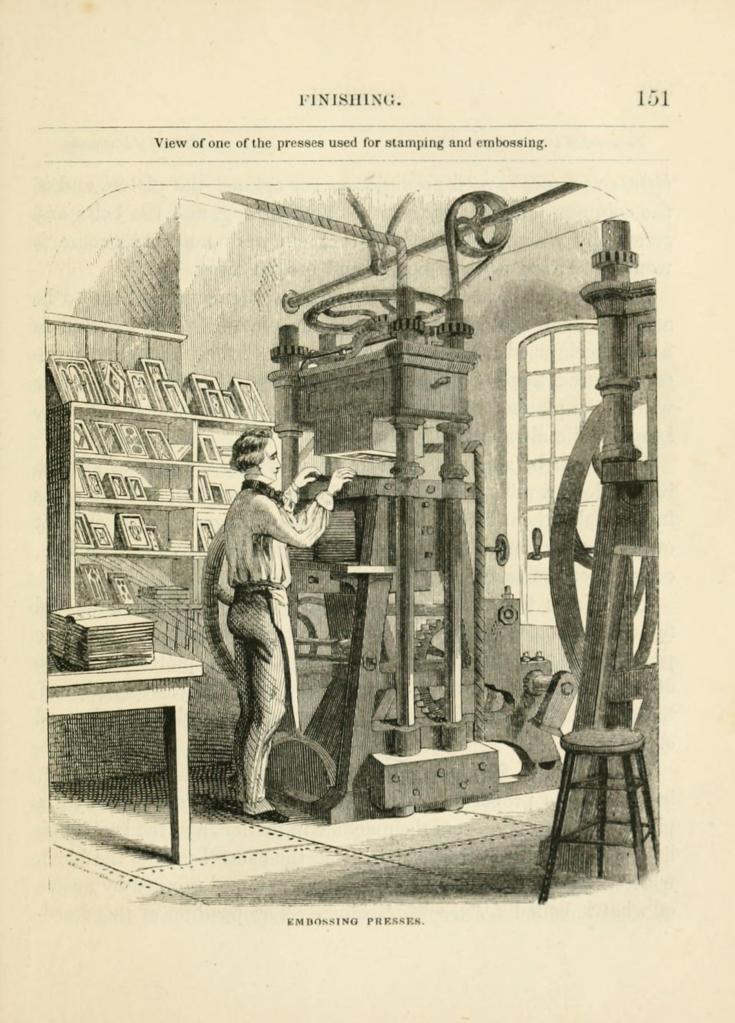
Illustrations featured in The Harper Establishment by Jacob Abbott.
- What sources might you use to introduce evidence of maker activity and experience in considering the media object you are studying?
Reflecting on my online exhibition project, I was inspired to dig further into the history of Harper’s Modern Classics. One of the more interesting and relevant sources that I stumbled upon was The House of Harper: The Making of a Modern Publisher by Eugene Exman. Published in 2010, this nonfiction book tells the story of the founding of Harper Collins, dating back to a Manhattan print shop in 1817.
I was also inspired to search on JSTOR for secondary sources relating to the strange phenomenon of library theft. I immediately found a 1978 article published in American Libraries. The article is called “Library Thefts: A Problem That Won’t Go Away,” and it was written by scholar J. T. Griffiths. I chose an older article to begin with because I thought it would be fascinating to analyze how library thefts have increased or decreased over the last 45 years or so. Griffiths argues that:
“For too many years library theft was treated like the weather; a lot of librarians talked about it, but few ever did anything about it. Fortunately, librarians are beginning to stir, and some thing is being done about this growing problem. Book losses in your library probably aren’t as bad as you think. More than likely, they are much worse” (Griffiths 224).
- What makes the object interesting to you? How did the object find its way here into the space or place where you found it?
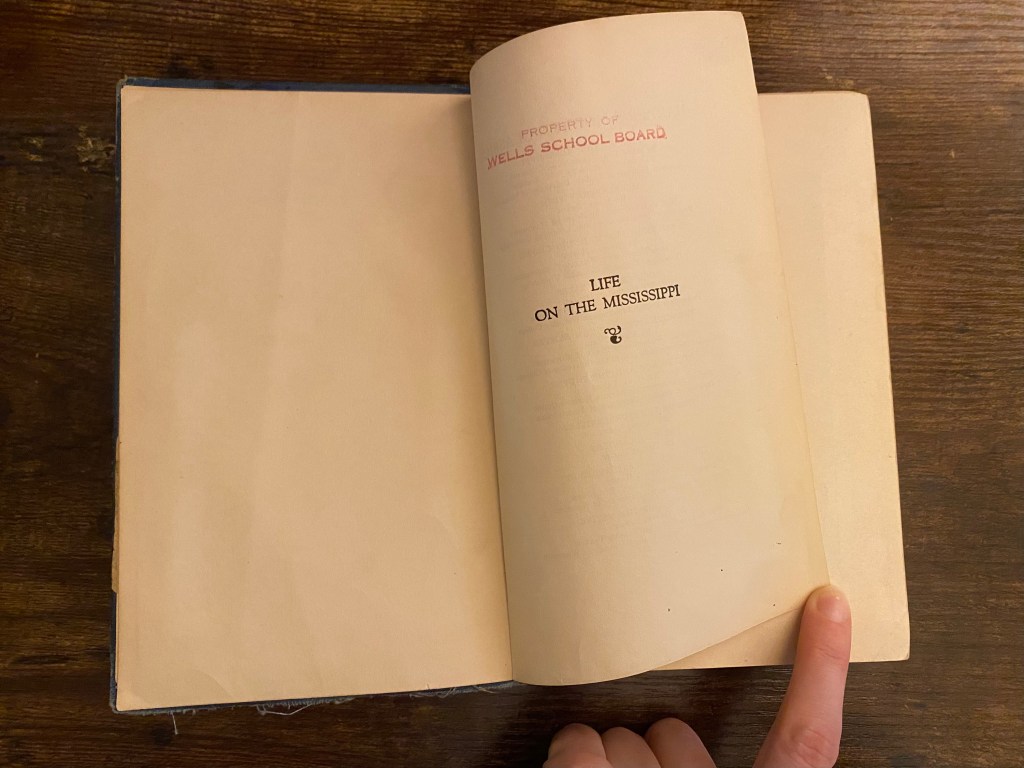
What makes this media object interesting for me personally is the backstory. My father inherited it from my aunt (1950-2026), who inherited it from her son (1983-2020), who inherited it from his father (1952-2017), who inherited it from my grandfather (1930-2015). My grandfather did not inherit the book from someone who came before him. He borrowed it and forgot to return it (knowingly or unknowingly) to the Wells Barkerville Superior School library. The media object could be labelled as stolen property, forgotten property or simply property that has changed hands and whose origins have been obscured by time and inheritance.
- What makes the object interesting to others?
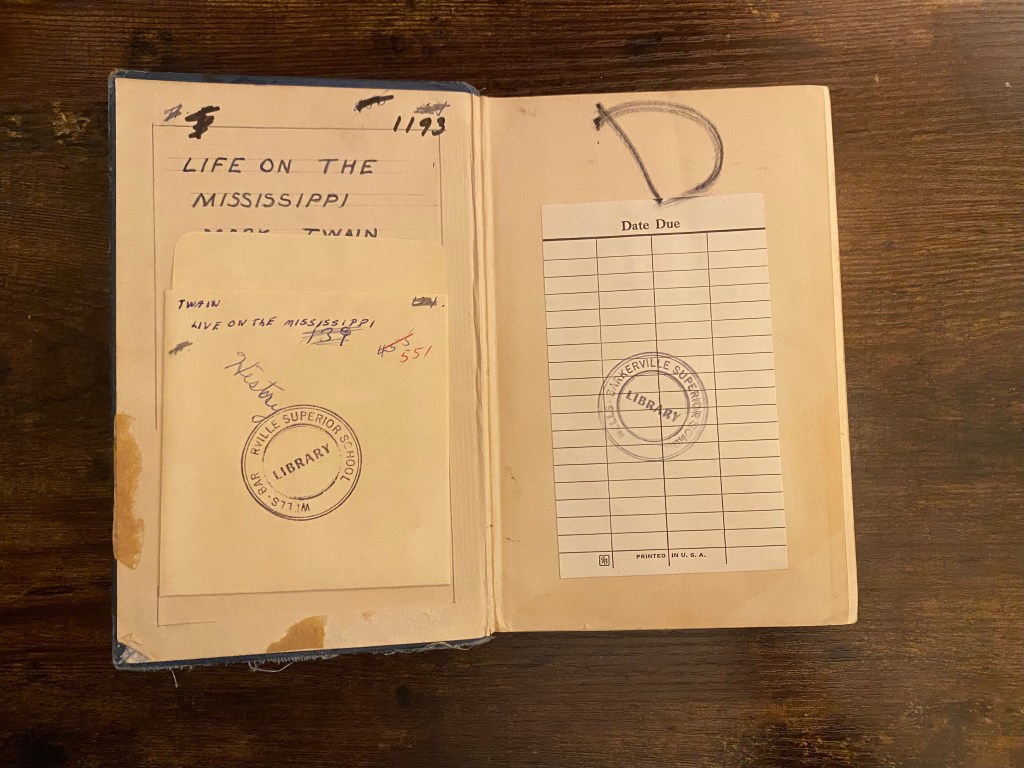
Something that immediately stands out about this media object is that the front page of the book has an old library checkout card but there is no due date marked anywhere on the page. The bottom of the card is marked with the words “Printed in U.S.A.” Each page has been stamped with the name of the library. Curiously, there are around nine different library call numbers that have been written and then scratched out by various hands and pens. The word “History” is scrawled diagonally across catalogue card envelope slot on the first page or endpaper.
The second page of the book is unironically stamped in red with the words “Property of Wells School Board.” The library connection and possible theft could be something that resonates and is interesting to other students who are unfamiliar with the old paper card catalogue system for borrowing library books. In her research on libraries catalogue cards and other anachronisms, scholar Karen Coyle provides an overview of the system:
“The library card catalog was one of the great inventions of the 19th century. Today we see it as old fashioned, and there are active users of libraries today who never used a card catalog, but just as today users get satisfaction out of typing in a keyword and getting results from a search engine, card catalog users approached the catalog as a box of treasure in which previously unknown things could be found” (Coyle 60).
- What are some descriptive notes about the analogue media object?
There are some mysterious splatter patterns on the fabric front cover and on the fore-edge of the book, which is the side opposite to the spine. On my third or fourth examination of the book, I also noticed that there is a partially ripped paper insert on the inside of the back cover that says the words “Date Due.” What I find fascinating about this partially obscured text is the implication that the book either fell out of library use and was perhaps donated to a thrift shop or placed in a donation bin … or the book remains property of the defunct Wells Barkerville Superior School library but a previous owner of the book sought to obscure that fact (perhaps because they stole the book or simply forgot to return it).
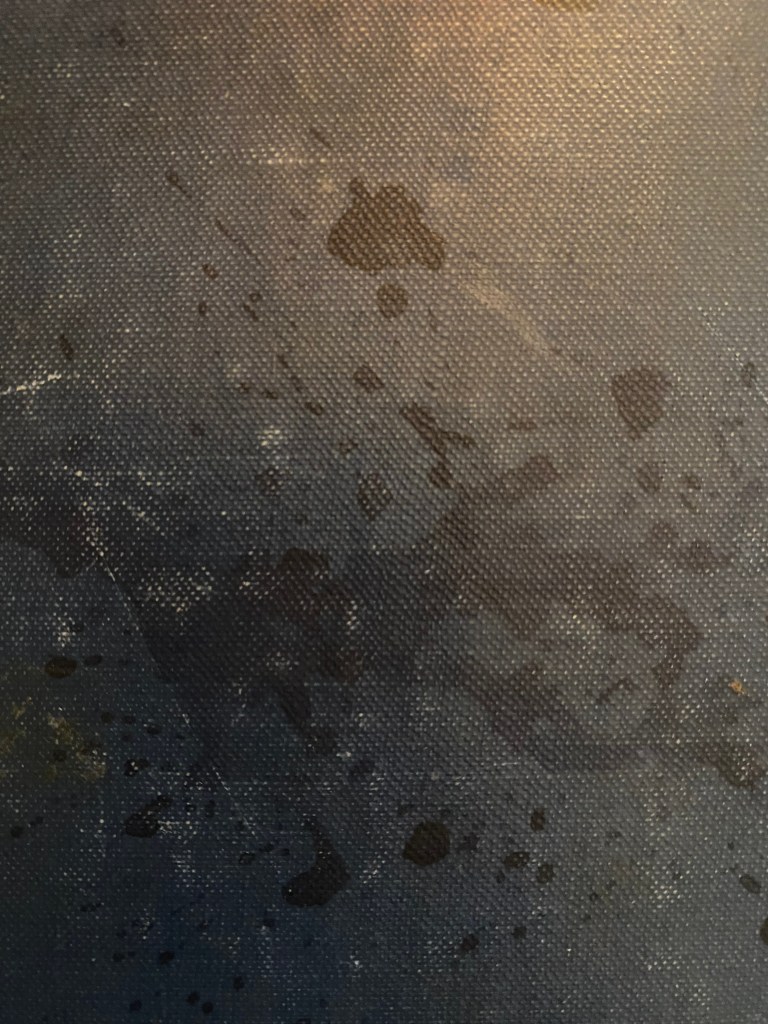
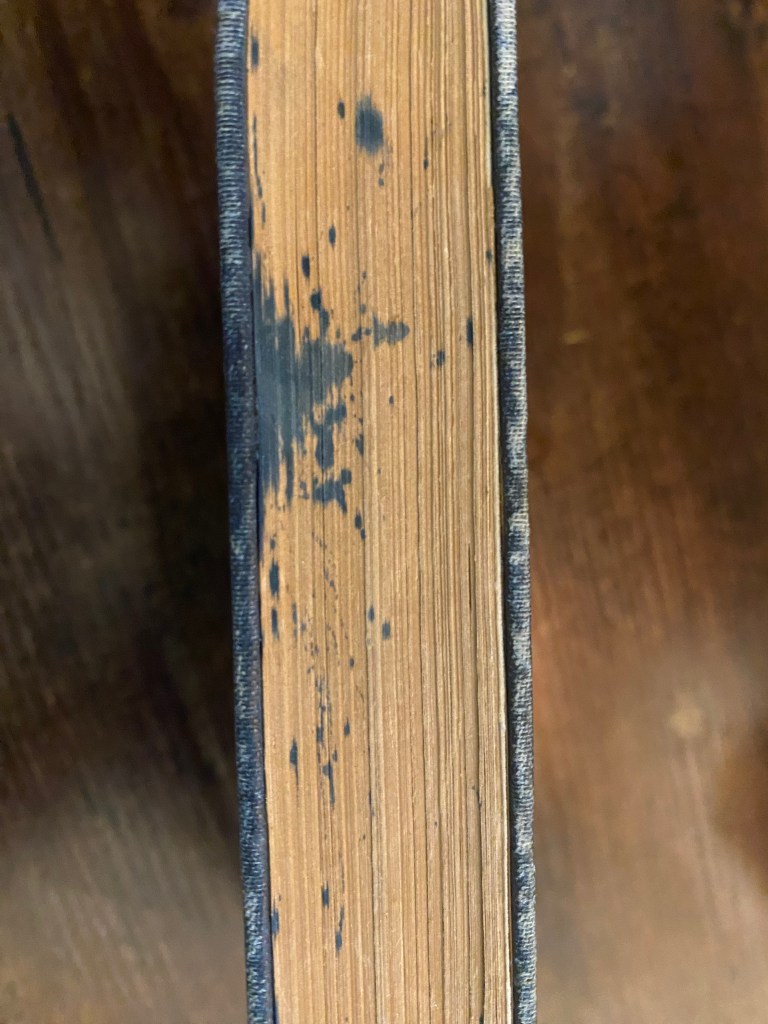
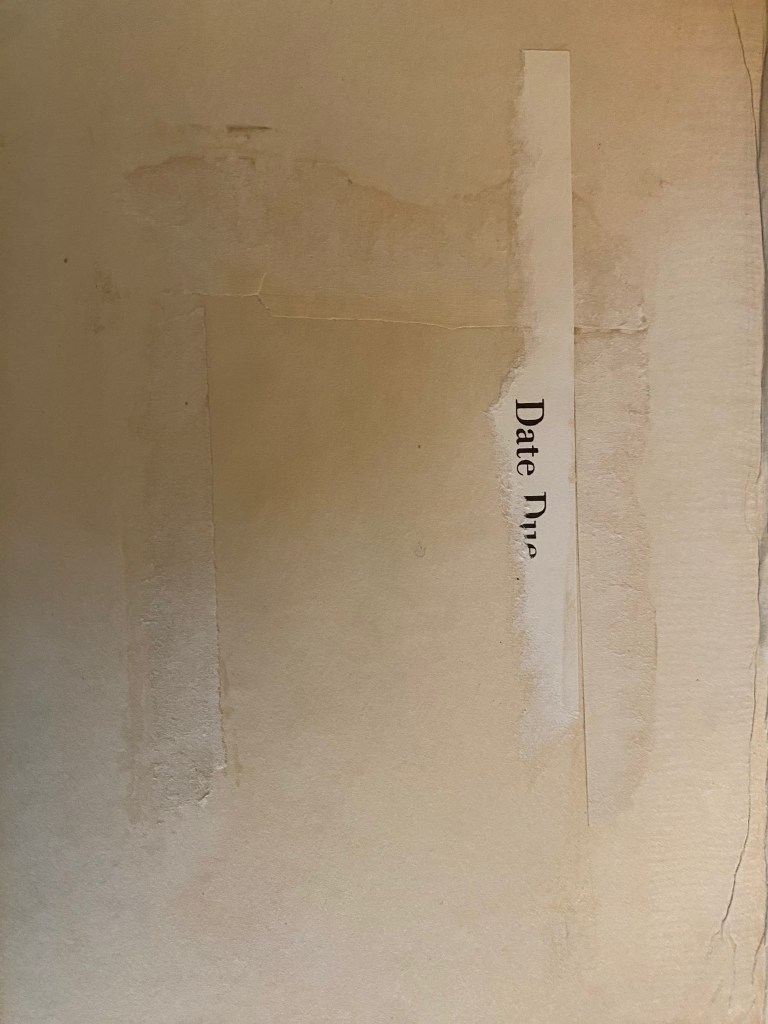
Photographs of Life on the Mississippi taken by CJ McGillivray
- What is your sensory experience of engaging with the media object?
After engaging in a reconstruction of the conditions of reading to better understand the material history of reading, I decided to read a couple pages of Life on the Mississippi by candlelight. The stakes were of course much higher with a vintage book than with reproduced, printed copies of poems. I also decided to flip through to a random page out of curiosity and I landed on page 155. I could have landed on any page, but books carry memories inside their pages and the effortlessness with which the book fell open to that page could mean that a previous reader hovered on it at some point. These are the words that stood out to me and feel relevant to an analysis of both the vintage and the historical:
“Now, if I wanted to be one of those ponderous scientific people, and ‘let on’ to prove what had occurred in the remote past by what had occurred in a given time in the recent past, or what will occur in the far future by what has occurred in late years, what an opportunity is here” (Twain 155).
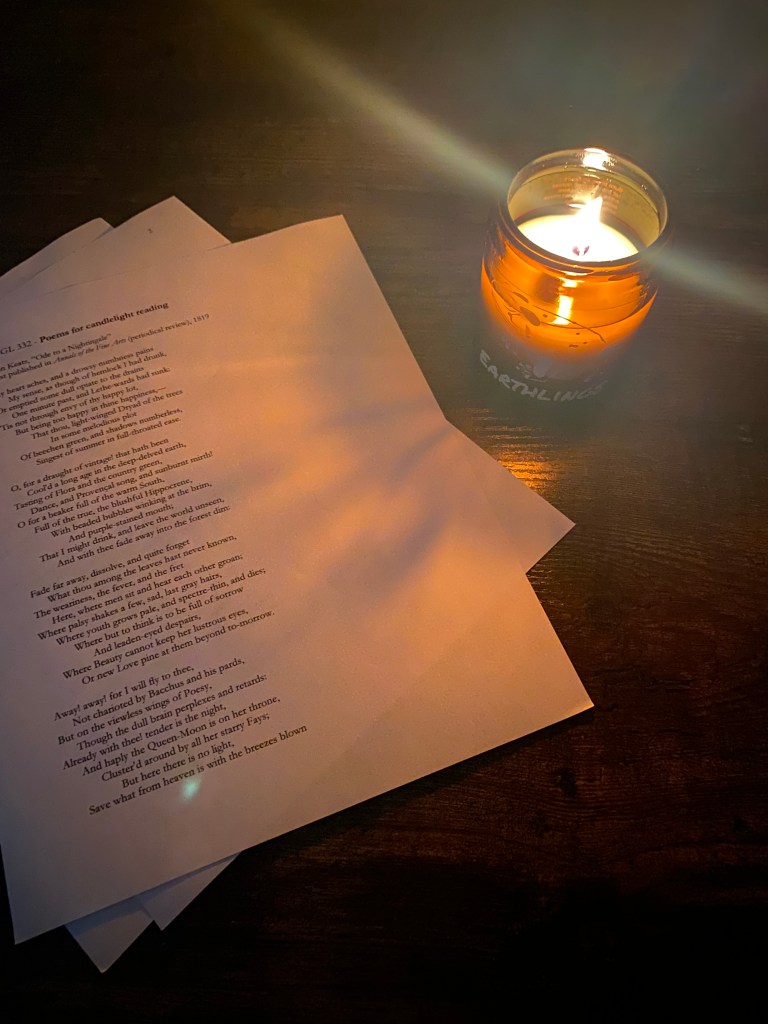
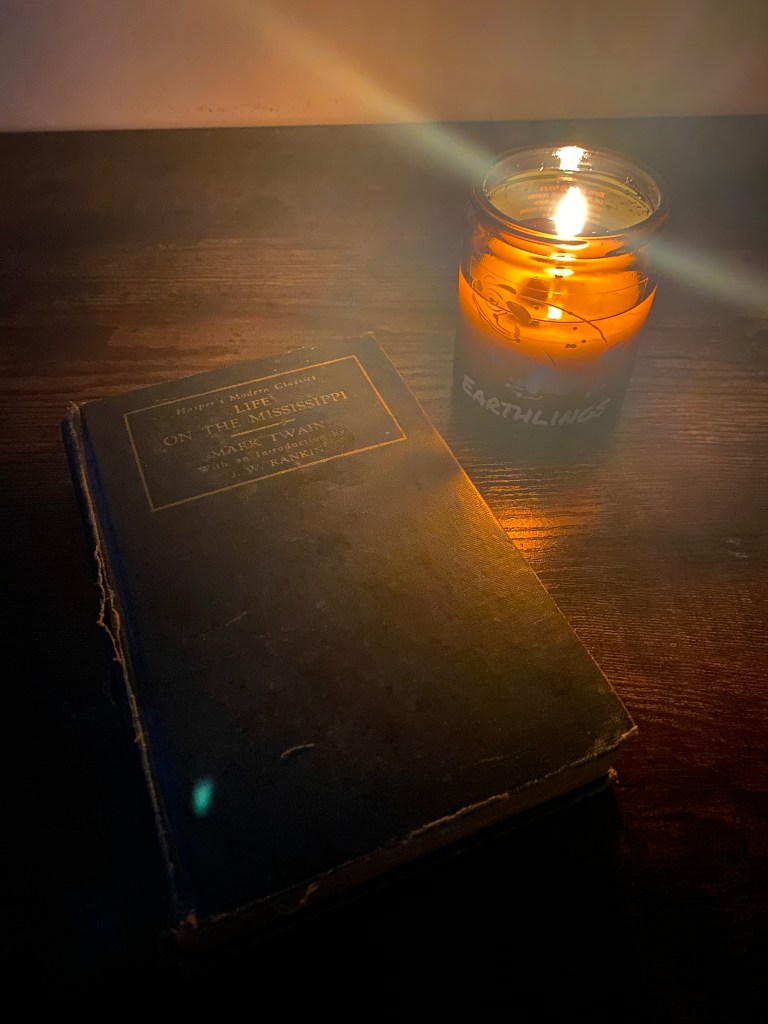
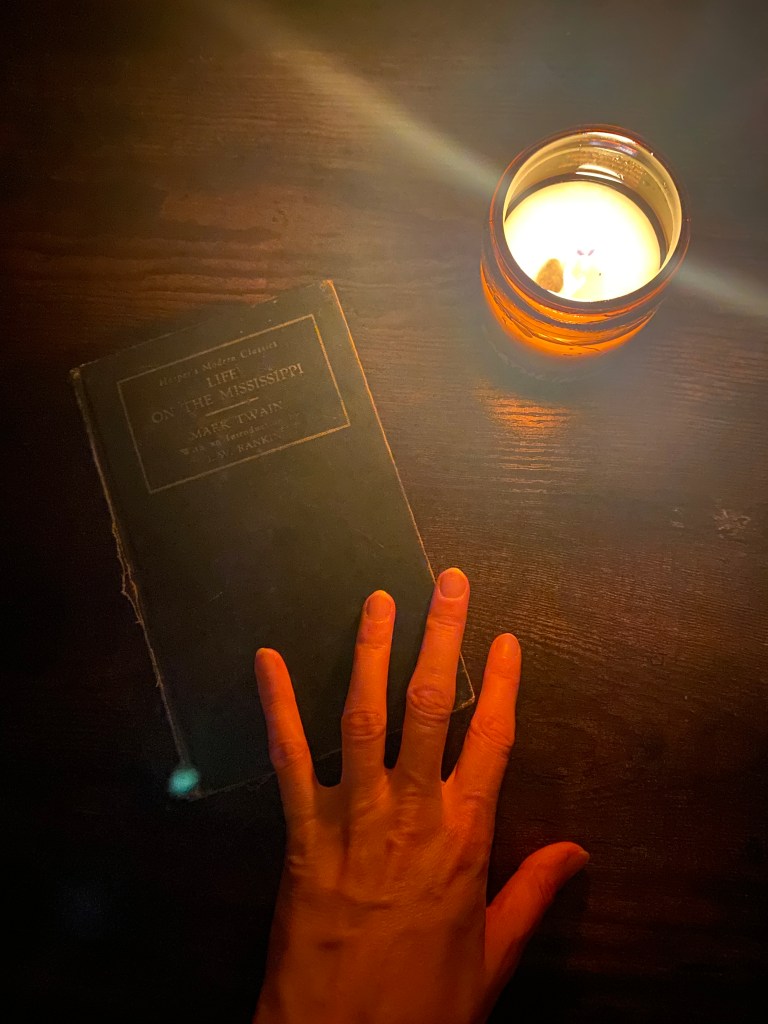
Photographs of Life on the Mississippi taken by CJ McGillivray
- Who wrote this text? For whom? When, where, why?
Life on the Mississippi was written by critically acclaimed American author Mark Twain (1835-1910). In his article on transcending the limits of experience, scholar Lawrence Howe argues that:
“despite its realism, Life on the Mississippi also reflects Twain’s romanticized relation to the war he never actually experienced. This lack spurred all the more his desire to achieve representative status by affecting history as a writer of its text if not an actor in its critical events. In the attempt to verify himself as an exemplary American rebel, the slanted autobiography within Life on the Mississippi presents Twain … as a self re-invented by the act of writing” (Howe 439).
- What do the markings on your media object reveal about the people who made them? Who were these people and why were they marking up the book?
In his book chapter titled Images in Lava: Felicia Hemans, Sentiment, and Annotation, scholar Andrew Stauffer argues that “marks in books in the circulating stacks are uncatalogued and often thought of as damage or graffiti” (24). But are marks and micro damages not a fundamental part of whats make a vintage book particularly interesting? As the scratched out and rewritten library call numbers in this media object demonstrate, there are living and breathing people behind these micro physical alterations. The markings in this media object and the obviously distinct handwriting imply that more than one librarian was involved in the process of cataloguing, reprocessing, and correcting errors.
- How much did this object cost the original user? Was it bought or rented?
The media object was originally purchased by the Wells Barkerville Superior School library before it was permanently borrowed by my grandfather and later inherited by his descendants. There is no price listed visibly anywhere on the inside cover. Similar copies are listed online for $9.99 USD from Dave’s Books Music Collectibles.
- Was this object discussed, or reviewed at the time of its publication?
There are no clear records of literary reviews or award nominations for Life on the Mississippi when it was first published in 1883. But in the years since his death, Mark Twain has become a household name with such elevated status as to be associated with numerous awards and accolades including the Mark Twain Prize for American Humor from The Kennedy Centre.
- Who owned or used this object? When did they own it and how did they use it?
The media object was originally owned by my late grandfather and is currently in the possession of my father. The novel has strangely survived multiple family members who unfortunately passed away in the last 11 years.
- Sidney Thomas Michael McGillivray (1930-2015) had the book in his possession from as early as his childhood or teenage years. The book remained in his possession until 2015 when the book was passed down to his eldest son.
- Roderick McGillivray (1952-2017) had the book in his possession from 2015 to 2017 before it was passed down to his eldest son and the eldest grandchild in our family.
- Rory Roderick Angus McGillivray (1983-2020) had the book in his possession from 2017 to 2020 at which point the chain of inheritance ascended rather than descended and the book was passed along to his mother.
- Judith Marie McGillivray (1950-2026) had the book in her possession from 2020 to 2026 before the chain of inheritance shifted from moving vertically to moving horizontally. The book was then passed along to my father (her brother-in-law).
- Scott Alexander McGillivray (born 1959) currently has the book in his possession.
This media object has had an unusually high number of owners in the last 11 years and it carries with it the strangeness of inheritance moving both vertically and horizontally. The book has been displaced both temporally and physically around the province: from Barkerville to Burnaby, then from Prince George over to Nanaimo and back down to Vancouver.
When the novel was previously housed in the Wells Barkerville Superior School library, other possible users would have included the school librarian, teachers, young students and perhaps even their parents. Popularity and frequency of use would have depended on the availability of other library resources.
- What are some additional observations about the object?
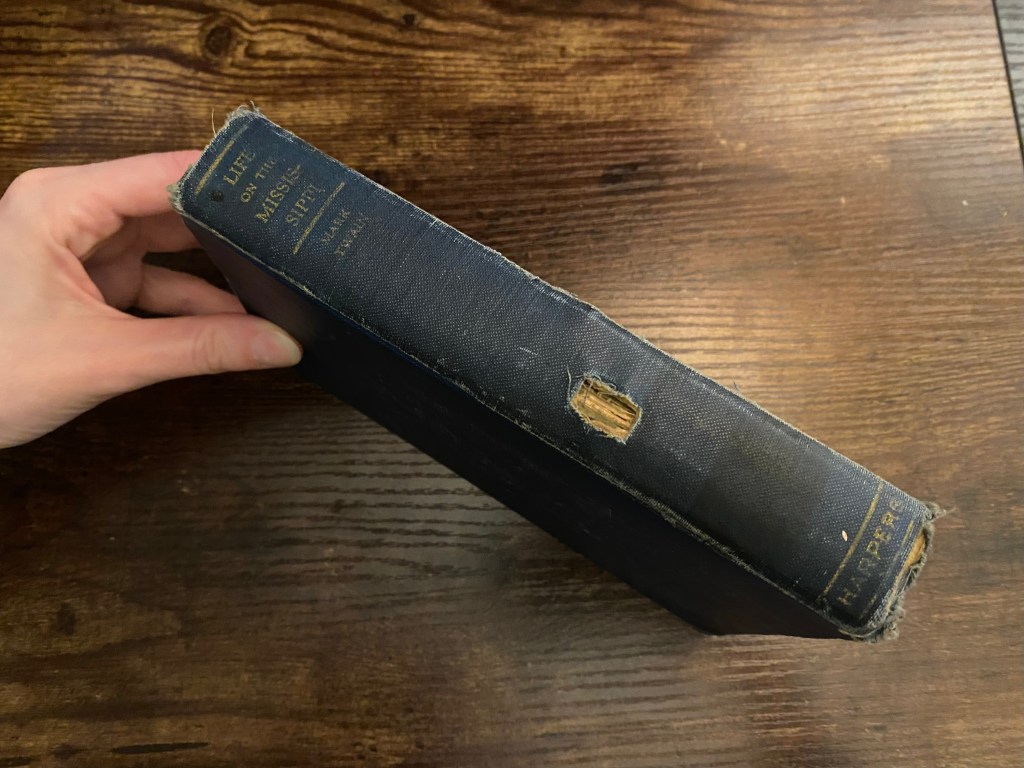
Examining the book ever so delicately, I flipped through the pages slowly from front to back to see if there were any natural creases or breakages in the spine. The book naturally fell open to pages 28 and 29. The inner crease of the book looks weathered and damaged with a modest tear running upwards.
- What questions does the media object inspire?
Analyzing this slightly damaged 1923 copy of Life on the Mississippi inspires me to do further research into the popularity of classical American literature in Canadian elementary schools.
- What are some recommended readings based on your research relating to this media object?
Check out this curated list on the Vancouver Public Library website!
Works Cited
Abbott, Jack. The Harper Establishment; or, How the Story Books are Made. Harper & Brothers, 1855.
Howe, Lawrence. “Transcending the Limits of Experience: Mark Twain’s Life on the Mississippi.” American Literature, vol. 63, no. 3, 1991, pp. 420–39. JSTOR, https://doi.org/10.2307/2927241.
Coyle, Karen. “Catalogs, Card — and Other Anachronisms.” The Journal of Academic Librarianship, vol. 31, no. 1, 2005, pp. 60-62. https://doi.org/10.1016/j.acalib.2004.12.001.
Krygier. John. “Harper’s Modern Classics.” Series of Series, 23 June 2023. https://seriesofseries.com/harpers-modern-classics/.
Twain, Mark. Life on the Mississippi. Harper’s Modern Classics, 1923.
 Between Time and Text